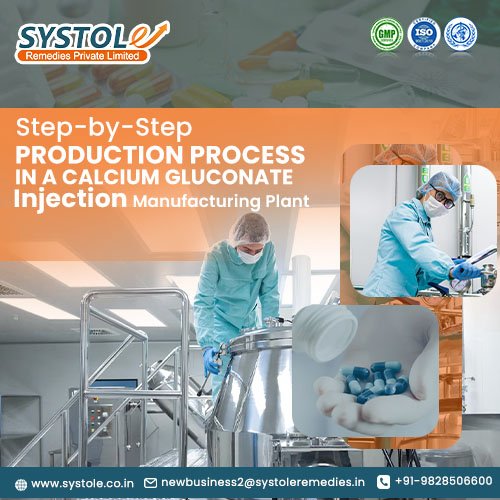
In the pharmaceutical industry, one of the most important sectors is the one that guarantees the high-quality, effective, and safe injectable formulations that are taken to the patients. Calcium Gluconate Injection is one of several products that are used to treat calcium deficiency and related conditions. Knowing the production process of this essential injection reveals clearly the precise, advanced technology and regulatory standards that are followed in every Calcium Gluconate Injection Manufacturing Plant.
What is Calcium Gluconate Injection?
Calcium Gluconate Injection is a new sterile soluble that provides calcium ions to the body, which are necessary for the contraction of muscles, the strength of bones, and the functioning of nerves. It is often administered in hospitals to patients suffering from low calcium levels, muscle spasms, or heart diseases that require calcium supplementation. Due to the potency of the injection, stringent quality control measures are enforced during the different stages of production, and only certified facilities are certified for the production of the injection.
Step-by-Step Production Process
1. Purchasing of Raw Materials and Their Quality Testing
Calcium carbonate and gluconic acid are the highest quality raw materials, and the production process starts with their being first procured. The quality analysis and purity tests are performed on each material to assure that the materials meet the required standards specified in the pharmacopeia. This stage is very important for the consistency of the final injectables.
2. Solution Preparation
Calcium gluconate is now to be dissolved in pure water, and the temperature and pH are to be controlled. Advanced mixing systems are then employed to ensure that the concentration of the solution is uniform and stable. The process is carefully monitored so that no contaminants or particles are allowed in the solution.
3. Filtration and Sterilization
Before filling, the prepared solution passes through multiple filtration stages using fine membrane filters to eliminate any microbial or particulate contamination. The filtered solution is then sterilized using high-pressure steam or autoclave systems to ensure total microbial safety.
4. Filling and Sealing
The automatic filling machines in a Class 100 cleanroom environment are responsible for transferring the sterile solution into ampoules or vials. The containers are then tightly sealed after being filled so that there is no contamination and the sterility is preserved. This step is greatly dependent on precision and is hence monitored by advanced automated systems.
5. Visual Inspection and Testing
Indeed, it is necessary to perform manual and automating visual inspection for each and every sealed vial or ampoule to detect any flaws, particles, or leaks that can be seen. In addition, sterility, pH and assay tests are conducted to ensure that the injection complies with the pharmacological and safety standards.
6. Labeling and Packaging
The quality control department is the one who gives approval first before the final product being labeled with batch numbers, manufacture date, and expiry date. Packaging is a process applied to the product to ensure that it will not be damaged while being transported or stored. The materials strength used for packaging is evaluated and their compatibility with the medication is also analyzed.
7. Storage and Dispatch
The Calcium Gluconate Injections prepared for shipment are kept in controlled temperature environments that are ideal for their stabilization. The supply chain follows Good Distribution Practice (GDP) standards to ensure that hospitals, pharmacies, and distributors receive products in safe and optimal condition.
QC standards assure us:
- Indian manufacturers of Calcium Gluconate Injection maintain strict quality standards, following WHO-GMP and ISO guidelines to ensure every product is safe and reliable.
- The production is sterile and free from contamination.
- Quality is the same among different batches.
- The dosage and purity are correct, and the waste is disposed of in an eco-friendly manner. The pharmaceutical industries in places like Kala Amb and Baddi have not only developed their capabilities by running up-to-date facilities but also conformed to global drug standards.
Top Places for Calcium Gluconate Injection Manufacturing
- The site for the Calcium Gluconate Injection Manufacturing Plant in Kala Amb: Its reputation is based on modern equipment, highly skilled personnel, and regular compliance with the law.
- The Calcium Gluconate Injection Manufacturing Plant in Baddi: A core region for pharmacy that has cutting-edge technology and is capable of producing high volumes of goods.
- The Calcium Gluconate Injection Manufacturing Plant in India: This is the place where many companies certified by WHO-GMP get their injections of the best quality exported globally.
Reasons for Choosing Systole for the Manufacture of Calcium Gluconate Injection?
Systole is regarded as one of the top manufacturers of Calcium Gluconate Injection because of its WHO-GMP and ISO-certified facilities, cutting-edge sterile production areas, professional quality control and R&D team, quick delivery, and exclusive packaging options. Thanks to its considerable presence in Kala Amb and Baddi, Systole ensures that each and every batch adheres to the international quality standards.
Final thoughts
Conclusion to the whole production of Calcium Gluconate Injection involves a very meticulous, clean, and regulation-following process. The Calcium gluconate injection manufacturing plant production sites are in Baddi and Kala Amb, which are highly regulated, ensuring that the injectable formulations are always safe, effective, and reliable. The quality of calcium supplements, which are safe and effective, has been trusted not only by healthcare professionals but also by patients, mainly because of the skills of the manufacturers like Systole, and that too, in the highest global standards.
FAQs
Q1. What is the main use of Calcium Gluconate Injection?
It is the treatment of calcium deficiencies and its usage in hypocalcemic emergencies as well as cardiac conditions.
Q2. Why is sterilization essential in calcium gluconate injection manufacturing?
Sterilization done to the product makes it free from any microbes and hence the injection is safe for patients.
Q3. Where are the major locations in India for the production of calcium gluconate injection?
Kala Amb and Baddi are the top industrial areas known for their advanced manufacturing (setups).